Acne is one of the most common skin concerns in Singapore, affecting both teenagers and adults. Beyond active breakouts, many individuals also struggle with post-acne marks, redness, clogged pores, and uneven skin texture. Singapore’s humid climate, heat, and environmental exposure can further worsen oil production and inflammation, making acne management more challenging.
While traditional acne facials focus on deep cleansing and extraction, many people are now exploring advanced treatments such as IPL facial therapy to support clearer-looking skin. Known for its ability to improve pigmentation and skin clarity, IPL is also increasingly used to help manage certain acne-related concerns.
This article explores how IPL facial treatments may help acne-prone skin, what concerns they target, and what to expect before considering treatment.
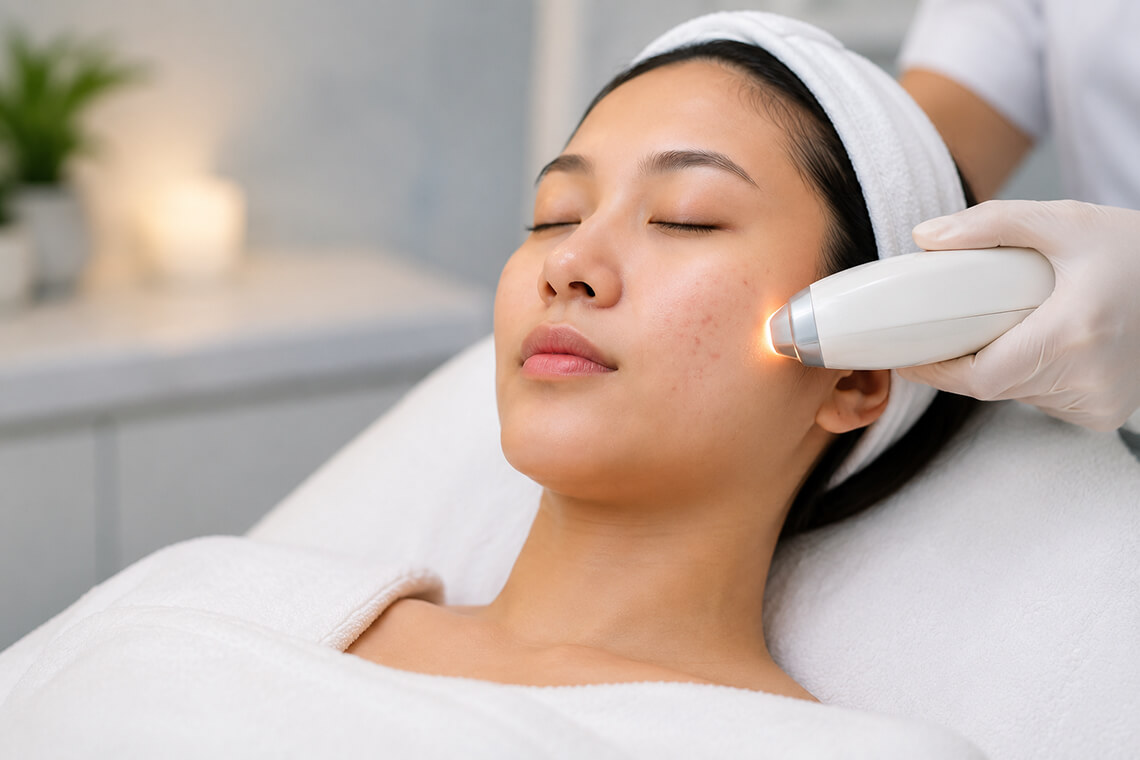
IPL stands for Intense Pulsed Light, a non-invasive light-based treatment commonly used to improve pigmentation, redness, and uneven skin tone.
Unlike traditional lasers that use a single wavelength, IPL delivers broad-spectrum light energy into the skin. This allows the treatment to target multiple skin concerns at the same time, including:
Because IPL treatments require minimal downtime, they are commonly included in skin maintenance programmes in Singapore.
One of the most common concerns after acne heals is lingering redness.
IPL works by targeting visible blood vessels beneath the skin. The light energy is absorbed by these vessels, which may help reduce redness and improve overall skin tone clarity gradually over multiple sessions.
This is especially helpful for individuals with:
After inflammation subsides, many individuals are left with dark acne marks or uneven pigmentation.
IPL helps by targeting excess pigment beneath the skin surface. As the pigment absorbs the light energy, it gradually breaks down and becomes less visible over time.
This may help improve:
Because pigmentation develops gradually, improvement with IPL is also progressive rather than immediate.
Excess sebum production is one of the key contributors to acne development, particularly in Singapore’s humid climate.
While IPL is not primarily an oil-control treatment, some individuals may notice that regular sessions help support:
This may indirectly help reduce the likelihood of clogged pores and recurring breakouts.
In addition to acne-related concerns, IPL may also improve:
Many individuals choose IPL because it addresses multiple concerns simultaneously while maintaining a relatively natural-looking result.
Rather than creating dramatic overnight changes, IPL works progressively to support smoother, brighter, and healthier-looking skin.
IPL may be more suitable for:
However, IPL is generally not recommended for:
This is why professional consultation is important before treatment.
A skincare professional can assess whether IPL is suitable based on your:
Although both treatments support clearer-looking skin, they work differently.
Treatment | Main Focus |
|---|---|
Acne Facial Treatment | Deep cleansing, extraction, oil control |
IPL Facial | Redness, pigmentation, skin clarity |
A traditional acne facial treatment Singapore programme often focuses on:
IPL, on the other hand, is more commonly used to improve:
In some cases, both treatments may be combined within a structured skincare plan depending on individual skin concerns.
Many first-time clients worry about whether IPL is painful.
Most people describe IPL as:
Treatment duration usually ranges from:
depending on the treatment area.
Because IPL is non-invasive, most individuals can resume normal activities shortly after treatment.
Immediately after treatment, the skin may appear:
Some pigmented areas may temporarily darken before gradually fading. This is considered part of the normal skin renewal process.
Most individuals experience minimal downtime, although proper aftercare remains important.
After an IPL facial, protecting the skin is essential to support recovery and minimise pigmentation recurrence.
Recommended aftercare includes:
In Singapore’s strong UV environment, consistent sun protection is especially important.
Some individuals notice visible brightness after a single session, but acne-related pigmentation and redness usually require multiple treatments.
Typically:
Because skin improvement is gradual, consistency plays an important role in achieving visible long-term results.
At Adonis Skincare, IPL facial treatments are customised according to each individual’s skin concerns and condition.
Our IPL approach focuses on:
Every treatment begins with a professional skin consultation to determine suitability and create a personalised treatment approach.
Whether you are dealing with acne marks, redness, uneven skin tone, or dull skin, IPL facial treatments may help support healthier and more refined-looking skin over time.
While IPL is not a replacement for professional acne facial treatment, it can play a supportive role in improving acne-related concerns such as redness, post-acne pigmentation, and uneven skin tone.
By helping to reduce visible acne marks and improve overall skin clarity, IPL facial treatments have become a popular option for individuals looking to enhance the appearance of acne-prone skin with minimal downtime.
At Adonis Skincare, we provide personalised IPL facial treatments tailored to different skin concerns and conditions. Our experienced team focuses on helping clients achieve clearer, healthier-looking skin through professional consultation and customised care.
With conveniently located outlets offering Ang Mo Kio facial, facial Bedok, facial Jurong East, facial Serangoon, and facial at VivoCity, professional skincare is easily accessible across Singapore.
If you are considering IPL facial treatment in Singapore, book a consultation with Adonis Skincare today to find out whether IPL is suitable for your skin concerns and skincare goals.
IPL may help mild inflammatory acne and post-acne redness, but it may not be suitable for severe cystic or highly inflamed acne. Professional assessment is recommended before treatment.
IPL may help improve post-acne pigmentation and redness, but deeper acne scars may require other specialised treatments.
Most people describe IPL as a mild snapping or warming sensation that is generally manageable.
Most individuals require multiple sessions, commonly around 3 to 6 treatments, depending on skin condition and pigmentation severity.
IPL helps improve certain acne-related concerns, but long-term acne management often requires a combination of skincare, lifestyle adjustments, and professional treatment plans.
There may be times when you’ve caught yourself staring into the mirror, trying to figure out what those tiny bumps on your face are. Acne, also known as…
Want brighter, glowing skin? One product you should never skimp on is sunscreen! Here are four effective ways to achieve brighter, glowing skin by using skincare products in…