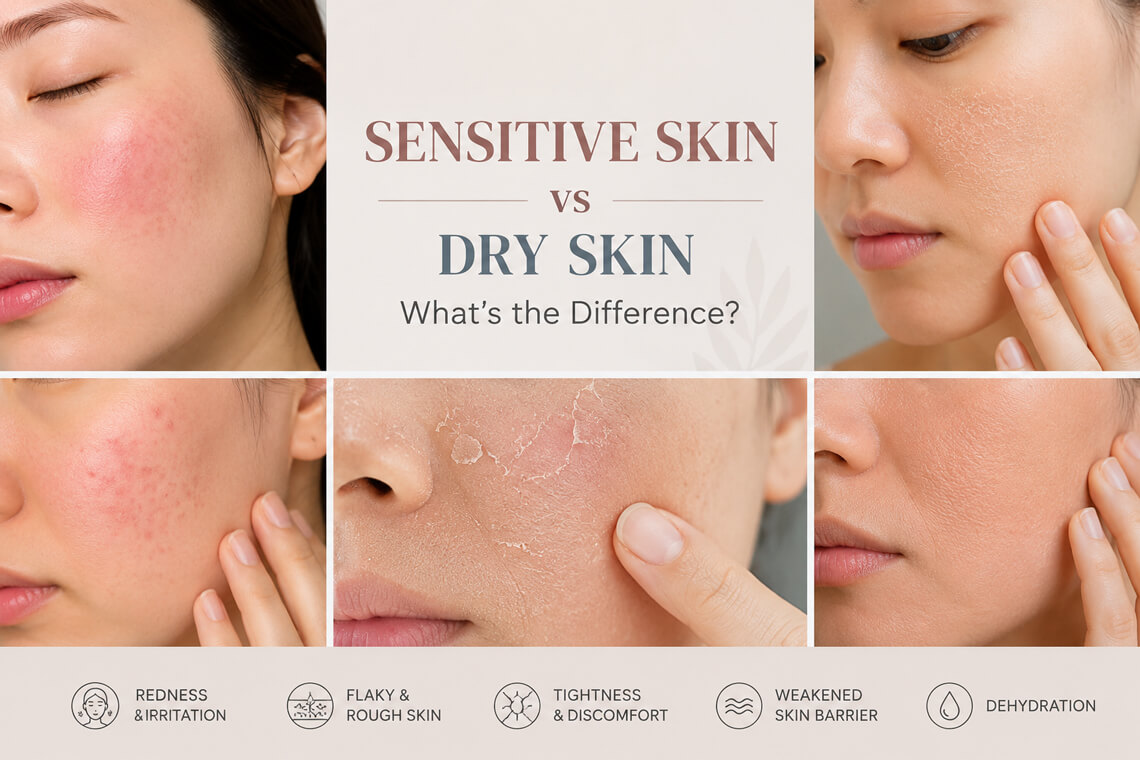
Many people assume that dry skin and sensitive skin are the same, but they are actually two different skin concerns. While both may cause discomfort, tightness, or irritation, they have different underlying causes and often require different skincare approaches.
Understanding whether you have dry skin, sensitive skin, or both can help you choose more suitable skincare products and facial treatments. Treating sensitive skin as though it is simply dry may not resolve redness or irritation, while focusing only on sensitivity without addressing dehydration may leave the skin feeling uncomfortable.
This article explains the key differences between sensitive skin and dry skin, common symptoms to look out for, and how professional facial treatments may help support healthier, more balanced skin.
Dry skin is a skin type characterised by a lack of natural oil (sebum). Without enough oil, the skin struggles to retain moisture and maintain a healthy skin barrier.
Common signs of dry skin include:
Dry skin is often influenced by genetics but may also become worse because of ageing, air-conditioning, cold weather, or harsh skincare products.
Sensitive skin refers to skin that reacts more easily to internal or external triggers.
Rather than lacking oil, sensitive skin has a weakened skin barrier, making it more vulnerable to irritation.
People with sensitive skin may experience:
Sensitive skin can affect all skin types, including oily, combination, normal, or dry skin.
Although the symptoms may appear similar, the underlying causes are different.
Dry Skin | Sensitive Skin |
|---|---|
Lacks natural oil | Reacts easily to triggers |
Often feels rough or flaky | Often becomes red or irritated |
Main concern is dehydration | Main concern is skin barrier sensitivity |
Benefits from nourishing moisturisers | Requires gentle, calming skincare |
May not always feel irritated | May sting or burn after skincare products |
Some individuals may experience both dry and sensitive skin at the same time, making it important to address hydration while protecting the skin barrier.
Yes.
Dry skin can weaken the skin barrier over time, making the skin more susceptible to irritation. Likewise, individuals with sensitive skin may also experience dehydration if the skin barrier is unable to retain moisture effectively.
When both concerns occur together, the skin may feel:
A customised skincare routine is often more effective than using products designed for only one concern.
Several factors may contribute to skin sensitivity, including:
Once the skin barrier becomes compromised, it becomes easier for irritants to penetrate the skin and trigger redness or discomfort.
Dry skin commonly develops due to:
These factors reduce the skin’s ability to retain moisture, leading to dryness and roughness.
Travelling overseas can also affect your skin. Moving from Singapore’s humid climate to colder or drier environments may increase dryness and weaken the skin barrier if your skincare routine isn’t adjusted accordingly.
If you have dry skin, focus on products that help replenish moisture and support the skin barrier.
If you have sensitive skin, choose gentle, fragrance-free skincare that helps calm irritation while protecting the skin barrier.
Regardless of your skin type, it is generally beneficial to:
Professional Sensitive Skin facial treatments may help support both dry and sensitive skin through customised care.
Depending on your skin condition, treatment may focus on:
A professional consultation helps determine the most suitable treatment according to your skin’s needs.
At Adonis Skincare, facial treatments for sensitive skin are customised according to each individual’s skin condition and level of sensitivity.
Our treatments focus on supporting the skin barrier while helping to:
Following a professional consultation, our therapists will recommend the most suitable treatment based on your skin concerns.
If your skin often feels irritated, uncomfortable, or reacts easily to skincare products, a personalised facial treatment may help support healthier, calmer skin over time.
Although dry skin and sensitive skin share some similar symptoms, they are not the same condition.
Dry skin lacks moisture and natural oils, while sensitive skin reacts more easily to environmental triggers and skincare products. Understanding the difference allows you to choose the right skincare routine and professional facial treatment for your skin.
If you’re unsure whether your skin is dry, sensitive, or experiencing both concerns, a professional skin assessment at Adonis Skincare can help identify your skin’s needs and recommend a suitable treatment plan.
No. Dry skin lacks natural oil and moisture, while sensitive skin reacts more easily to environmental factors or skincare products due to a weakened skin barrier.
Yes. Sensitive skin is not a skin type. Individuals with oily, combination, normal, or dry skin can all experience skin sensitivity.
Stinging may be a sign of a weakened skin barrier or skin sensitivity. Harsh ingredients or over-exfoliation can also contribute to irritation.
Yes. Gentle facial treatments designed for sensitive skin may help calm irritation, restore hydration, and support the skin barrier. A professional consultation can determine the most suitable treatment.
Dry skin usually feels rough, flaky, or tight due to a lack of moisture. Sensitive skin is more likely to become red, irritated, or uncomfortable when exposed to skincare products, weather changes, or environmental triggers.
There may be times when you’ve caught yourself staring into the mirror, trying to figure out what those tiny bumps on your face are. Acne, also known as…
Want brighter, glowing skin? One product you should never skimp on is sunscreen! Here are four effective ways to achieve brighter, glowing skin by using skincare products in…