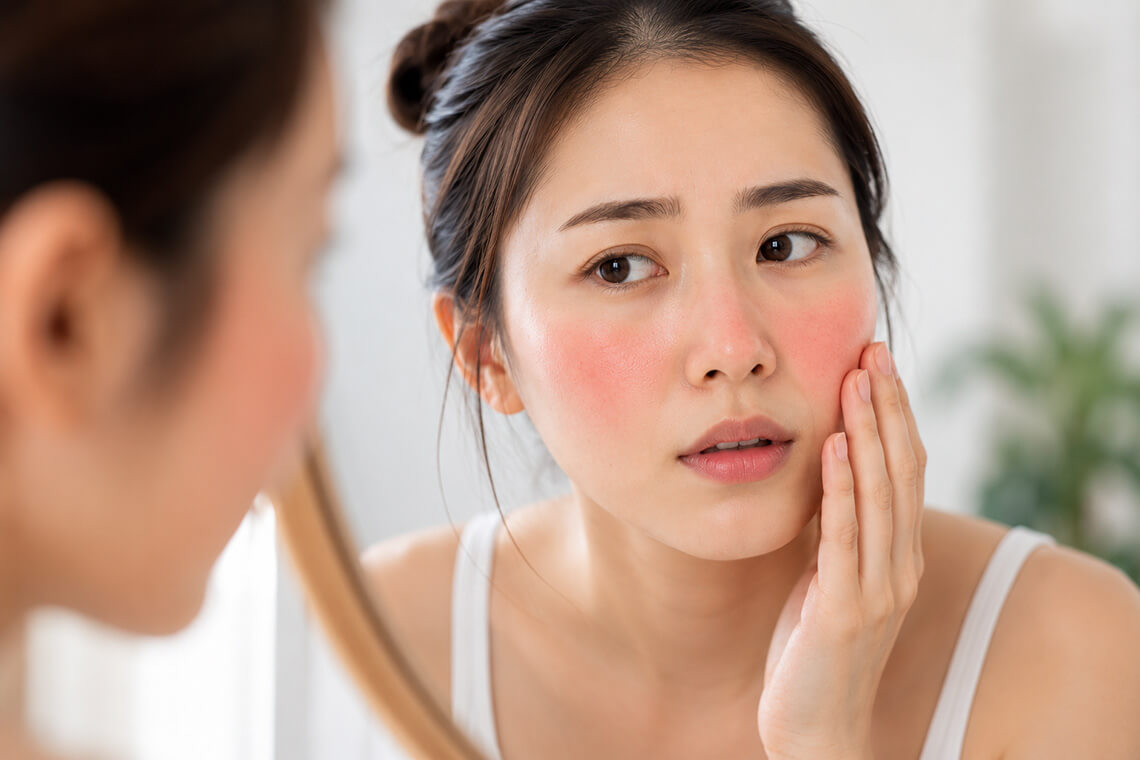
Does your face suddenly become red after washing your face, exercising, spending time outdoors, or even drinking a hot cup of coffee?
Perhaps your cheeks stay flushed long after everyone else’s has returned to normal, or your skin stings whenever you try a new skincare product. If this sounds familiar, you’re not alone.
Facial redness is one of the most common skin concerns, affecting people of all ages. While occasional flushing is a normal response to heat, exercise, or emotions, frequent or persistent redness may indicate that your skin has become more sensitive than it should be.
In many cases, facial redness is your skin’s way of telling you that its protective barrier has been weakened. When this happens, your skin becomes less able to defend itself against everyday irritants, making it more reactive to weather changes, UV exposure, skincare products, and environmental stress.
The good news is that facial redness can often be managed with the right skincare routine, healthy lifestyle habits, and professional treatments designed specifically for sensitive skin.
Facial redness occurs when tiny blood vessels near the surface of your skin widen, allowing more blood to flow through them.
This increased blood flow causes the skin to appear pink or red, particularly on the cheeks, nose, forehead, or chin.
For most people, redness fades naturally within a few minutes. However, if your skin barrier is weakened or your skin is naturally sensitive, redness may occur more frequently, last longer, or be accompanied by dryness, itching, burning, or stinging sensations.
Although facial redness itself isn’t a skin condition, it is often a symptom of underlying skin sensitivity or irritation.
Facial redness can have many possible triggers, and recognising the pattern is often the first step towards managing it. Learn more about common facial redness triggers and practical ways to help prevent recurring redness.
Facial redness can be triggered by a combination of internal and external factors. Understanding these triggers can help you better manage your skin and reduce flare-ups.
Your skin barrier is your body’s natural shield.
It locks moisture in while keeping irritants, allergens, pollution, and bacteria out.
When this barrier becomes weakened, your skin loses moisture more easily and becomes vulnerable to irritation. As a result, even mild triggers such as wind, air-conditioning, skincare products, or warm water can cause facial redness.
A compromised skin barrier is one of the most common causes of sensitive skin.
Living in Singapore means your skin is constantly exposed to high humidity, strong UV rays, and fluctuating temperatures between air-conditioned environments and the outdoors.
Heat causes blood vessels to expand, making redness more visible. Combined with UV exposure, repeated heat stress may gradually weaken your skin barrier and increase skin sensitivity over time.
Many people unknowingly over-treat their skin.
Using multiple exfoliating acids, retinol, Vitamin C, scrubs, and acne products at the same time can overwhelm your skin.
Instead of becoming healthier, the skin barrier becomes damaged, resulting in:
Sometimes, less really is more. Some everyday skincare habits can also make sensitive skin more reactive. Learn about these common sensitive skin mistakes, including over-cleansing, over-exfoliating and using products that may weaken the skin barrier.
Ever noticed your face turning red during a presentation or when you’re feeling embarrassed?
Stress and strong emotions trigger your nervous system, causing blood vessels to dilate temporarily.
People with sensitive skin often find that this redness takes much longer to disappear.
Some foods naturally increase blood circulation.
Common triggers include:
These don’t necessarily damage your skin, but they can temporarily worsen facial redness.
Sometimes facial redness isn’t simply sensitive skin.
It may also be linked to:
Condition | Common Symptoms |
|---|---|
Sensitive Skin | Redness, dryness, stinging |
Rosacea | Persistent redness with visible blood vessels |
Eczema | Dry, itchy patches |
Contact Dermatitis | Rash after using certain products |
Allergic Reactions | Sudden redness and swelling |
If redness becomes persistent, painful, or spreads beyond the face, it’s advisable to seek professional advice.
Many people think they simply have “sensitive skin” when the real issue is a weakened skin barrier.
You may have a damaged skin barrier if you experience:
The good news is that the skin barrier can often recover with proper care and patience.
Professional treatments are highly effective for persistent redness, but there are also simple habits that can help calm your skin at home.
If your face suddenly becomes red or feels hot, place a clean, cool (not icy) damp cloth over the affected area for 5–10 minutes.
This helps calm inflammation and temporarily reduce redness without irritating the skin further.
When your skin is irritated, avoid layering too many products.
For a few days, stick to a simple routine:
Giving your skin time to recover often works better than adding more treatments.
Very hot water strips away natural oils and can worsen facial redness.
Instead, cleanse your face using lukewarm water and avoid prolonged hot showers.
Keeping your skin well hydrated strengthens the skin barrier and reduces irritation.
Look for moisturisers containing:
These ingredients help lock in moisture and improve skin resilience.
Daily sunscreen is one of the best ways to prevent facial redness from worsening.
Choose a broad-spectrum sunscreen with at least SPF 30 and reapply when spending extended periods outdoors.
Avoid rubbing your face with towels or cleansing brushes.
Instead, gently pat your skin dry using a soft towel.
Small habits like this can make a big difference for sensitive skin.
Everyone’s skin is different.
Keep a simple diary of when redness appears. You may notice patterns related to:
Once you understand your triggers, they’re often easier to manage.
Your skin repairs itself while you sleep.
Poor sleep can increase inflammation, weaken the skin barrier, and make facial redness more noticeable.
Aim for 7–9 hours of quality sleep whenever possible.
Choosing the right skincare ingredients can make a significant difference if you experience frequent facial redness.
If your skin is easily irritated, introduce these ingredients gradually:
Not everyone needs to avoid these ingredients completely, but they should be used according to your skin’s tolerance.
Many people worry that facials are too harsh for sensitive skin.
In reality, a facial treatment for sensitive skin can help calm irritation when it is specifically designed for delicate, reactive skin.
Rather than using aggressive exfoliation or strong active ingredients, sensitive skin facials focus on restoring the skin barrier, improving hydration, and reducing inflammation.
The key is choosing a treatment that is tailored to your skin’s needs.
If redness or sensitivity continues despite a gentle home-care routine, professional treatment may provide a more personalised approach. Learn why professional facials for sensitive skin can be beneficial when treatments are selected according to your skin condition and sensitivity level.
At Adonis Skincare, we understand that sensitive skin requires a personalised approach—not a one-size-fits-all solution.
Our Sensitive Skin Facial begins with a professional skin consultation to assess your skin condition before recommending the most suitable treatment.
Designed for skin that is easily irritated, dry, or prone to facial redness, our treatment focuses on:
If you’re looking for a facial for sensitive skin in Singapore, our personalised treatments are carefully tailored to soothe delicate skin while helping you achieve a calmer, healthier complexion over time.
Learn more about our Sensitive Skin Facial: https://www.adonis-skincare.com/facial-for-sensitive-skin/
Hot water, harsh cleansers, or a weakened skin barrier can trigger facial redness after cleansing. Switching to a gentle cleanser and lukewarm water may help.
It can be. While redness is commonly associated with sensitive skin, it may also be caused by conditions such as rosacea, eczema, or allergic reactions.
Yes. Emotional stress and anxiety can temporarily widen blood vessels, causing flushing. Sensitive skin often takes longer to recover from these episodes.
Yes! Provided they’re specifically designed for sensitive skin. Gentle, hydrating facials can help strengthen the skin barrier and reduce irritation.
This depends on your skin condition. Many people benefit from a treatment every 4–6 weeks, but your therapist can recommend a schedule based on your individual needs.
This depends on your skin condition. Many people benefit from a facial every 4 to 6 weeks, but the ideal treatment frequency varies depending on your skin sensitivity, concerns, and treatment goals. A professional skin consultation can help determine the most suitable schedule.
Facial redness isn’t something you should simply ignore. Whether it’s caused by a weakened skin barrier, environmental stress, or naturally sensitive skin, understanding the underlying cause is the first step toward healthier skin.
By combining gentle home care with the right professional support, you can reduce irritation, strengthen your skin barrier, and enjoy a calmer, more comfortable complexion.
If you’re looking for a sensitive skin facial treatment in Singapore, the team at Adonis Skincare is here to help. Our personalised Sensitive Skin Facial is designed to soothe delicate skin, restore hydration, and support long-term skin health.
There may be times when you’ve caught yourself staring into the mirror, trying to figure out what those tiny bumps on your face are. Acne, also known as…
Want brighter, glowing skin? One product you should never skimp on is sunscreen! Here are four effective ways to achieve brighter, glowing skin by using skincare products in…